Substitute Alpha Gets Confessed to by Her Ex’s Aunt on a Survival Variety Show – Chapter 137
by Little PandaPride of the Earth
Faced with Nan Huaixu’s questions, Fei Tuoma did not answer directly. Her gaze darkened slightly as she looked out calmly at the barren field in the rainy night.
Sometimes, not answering was an answer in itself.
Nan Huaixu furrowed her brow slightly. “So you didn’t find us by following Wofu. You’d been observing us all along. You discovered we’d moved in here while searching for Wofu, that we’d built a shelter next to the wooden cabin. You let Wofu kill our camellia chicken. You used our interactions with Wofu to judge whether we were kind, whether we were trustworthy—and that’s also why you could come to our aid the moment Wofu and I were attacked.”
“Fei Tuoma, if we had hurt Wofu for killing the camellia chicken, would you have hurt us? If we hadn’t rescued Wofu and you’d judged us untrustworthy, would you still have compensated us?”
“Fei Tuoma, I thought we were communicating as equals, with mutual trust. But your behavior makes me feel you’ve been dishonest. Tell me—how am I supposed to feel at ease continuing to talk with you?”
Every one of Nan Huaixu’s questions struck Fei Tuoma to the core. They also brought a faint smile to Liu Yinxi’s lips, because Liu Yinxi now knew that Nan Huaixu, like her, maintained her guard—they were on the same side, united as one.
Fei Tuoma met Nan Huaixu’s gaze with an apologetic smile. “I’m sorry I didn’t explain things to you. Please rest assured—I had absolutely no intention of harming you. When I found Wofu, you were already treating her wounds. I didn’t see the moment she killed the chicken. If I had been there, I would have stopped her.”
Nan Huaixu said gravely, “You live in the rainforest. You have your own principles for self-preservation, and staying vigilant is necessary. Thank you for the eggs and the quail. But from now on, whatever your purpose, please stop tracking and observing us. I estimate that in about another month, the competition will be decided, and we’ll leave Jinzhou Island. You can rest assured too—we’ll definitely report what you asked us to.”
“You’re leaving in just a month?” Fei Tuoma suddenly grew anxious.
Nan Huaixu wasn’t certain about the exact final date either, but surviving to one hundred days would definitely earn them prize money. She nodded. “Yes, we’re going home, back to our homeland.”
Fei Tuoma frowned and slowly lowered her head. “I promise I won’t disturb you again. But before that, I’m sorry—I have to ask something of you.”
Nan Huaixu and Liu Yinxi asked together, “What?”
Fei Tuoma looked up at them, her eyes firm. “I’ll give you something in return. I think you’ll need it. It should have been yours to begin with.”
Liu Yinxi asked, “What thing?”
Fei Tuoma smiled. “Let me tell you a story first.”
“The story begins in London, twenty years ago.”
A midsummer twenty years ago, a wild botanical research expedition set out from London for the Greater Sunda Islands and New Guinea region.
The expedition leader was an older woman. The leader had a younger daughter she was proud of—lively and cheerful by nature, filled with longing for the unknown world. She was a teacher at a special school, and during summer break she traveled with her mother to the mysterious tropical island for the expedition.
Every place they went, the expedition contacted the local environmental protection department. Since their research would take them deep into the primeval forest, they hired local indigenous people as guides and also had to obtain permission from some tribal chiefs.
Jinzhou Island was their final stop.
Along the way, the botanists collected specimens and took photographs. The teacher recorded everything she saw and heard in a notebook she carried with her, planning to tell her lovely students about it when she returned to London.
She loved children.
The Tuowa Tribe on Jinzhou Island was the most prosperous and flourishing tribe she had encountered on the entire journey. There were tall, spacious wooden houses with upturned eaves, vivid and colorful orchids, delicious fresh food, and a group of innocent, pure-hearted children.
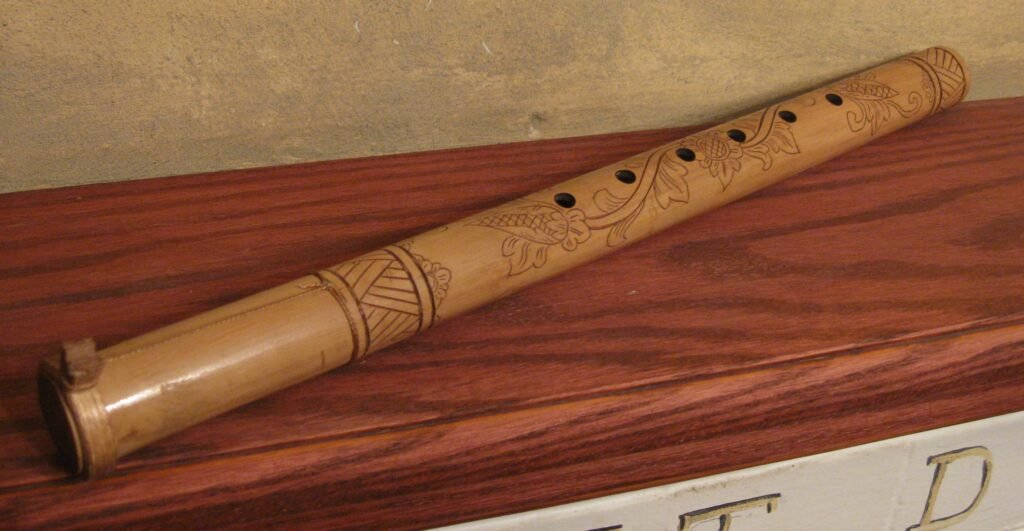
The locals had a type of long flute called the Suling1. The Tuowa people liked to play the Suling at dawn and dusk, regarding it as a language for communicating with the Earth God and all life in the forest. Tuowa children learned the Suling from a young age, and an annual Suling competition was held.
The winner of that year’s Suling competition was the chief’s younger daughter. The expedition couldn’t understand the Tuowa tribe’s ancient language and had to rely on a local Jinzhou Island translator. But the teacher had actually learned some everyday Tuowa phrases. She proudly told her mother and the other botanists: The winner is Ruiliya.
She could also correctly interpret the meaning of the Tuowa name: Golden Dawn.
During the day, the expedition ventured deep into the jungle in search of rare plants. The teacher stayed behind in the tribe to play with the children.
The teacher asked Ruiliya to teach her how to play the Suling. When she learned that Ruiliya had just completed the tribe’s warrior trial and was building a wooden house of her own, she asked whether Ruiliya would let her borrow the house.
Ruiliya was quite taken with this beautiful, passionate foreign girl. She asked her: What do you want my wooden house for?
The teacher smiled and gave her a fountain pen: I want to teach the children English, arithmetic, hygiene, and world geography.
Ruiliya was a bit troubled: I can lend it to you, but I think the tribal elders won’t be happy about it. The Tuowa have our own writing and history. We choose to live in the forest because this is our ancestral homeland. We don’t want to relive the bloody tragedies of the last century.
The teacher spoke with her earnestly: But if you don’t understand the outside world, other dangers will always find you, won’t they? The tribe has a small shop, and the chief and elders communicate with the outside. The children are the tribe’s new hope. They have the right to choose whether to learn modern knowledge. Ruiliya, if you become the next chief, I hope this place can be a home where nature and modernity coexist in harmony.
Ruiliya answered her: I won’t become chief. That would cost me my freedom. The tribe has my older sister.
In the end, Ruiliya still lent her newly built wooden house to the teacher.
The teacher taught her to write letters with the fountain pen. Ruiliya used chalk to teach her to write Tuowa script.
Ruiliya found the teacher a large black slate. The teacher wrote on it with white chalk, teaching the tribal children. Ruiliya would study addition, subtraction, multiplication, and division alongside the children, learning about continents and oceans. The teacher would sit with the children and listen to Ruiliya teach the survival laws of the forest and hunting techniques…
This story was like any ordinary love story—nothing particularly novel. Two people in their prime, an omega and an alpha, admired and fell in love with each other. They privately pledged themselves to each other, and plucked the fruit of love.
The expedition was about to leave Jinzhou Island for London. The Tuowa chief also discovered that Ruiliya had been helping the teacher secretly teach the children foreign culture, and was furious.
The teacher left her mother a farewell letter and threw herself into the embrace of her love and the forest. Ruiliya was expelled from the tribe, branded as an outcast seduced by evil spirits.
The two—one who had abandoned her people, and one who had been abandoned by her people—built a home together by the dazzling emerald shores of Jiganbu Lake. They raised livestock, grew crops, and lived a sweet, contented life.
Because they both spoke Tuowa, English, and the Jinzhou language, the forest rangers at the park would contact them to communicate with the Tuowa tribe. Even though most of the tribe shunned them, the elder in charge of outside communication and the merchants who traded at the small shop still welcomed them.
Two years later, they had a lovely daughter. She inherited one blue eye from the teacher and one black eye from Ruiliya. They gave her a beautiful name—Fei Tuoma.
Pride of the Earth.
Bearing the boundless love of two mothers.
“If only I had never been born.”
The romantic love story ended with Fei Tuoma’s words.
Liu Yinxi, who had listened quietly to this point, showed no particular expression. “Is your background related to what you want to ask of us? You can just tell us directly.”
Clearly, Liu Yinxi had no interest in spending time on a passing stranger. She wanted Fei Tuoma to state her needs outright so she could assess whether or not to help.
Nan Huaixu’s deep eyes, meanwhile, revealed the heavy thoughts weighing on her heart.
Nan Huaixu didn’t understand why Liu Yinxi—who always gave her comfort and warmth—could sound so cold after hearing Fei Tuoma’s sorrowful words. She first offered Fei Tuoma a few words of reassurance, then continued as a listener: “Someone once told me that no matter how unpleasant things may become later, you can never deny the affection you once shared.”
Liu Yinxi looked up at her. Those were words she had said back when they were still at the seaside, comforting Nan Huaixu after she lost her friend who did nail art.
Nan Huaixu gave Liu Yinxi a soft smile, then said to Fei Tuoma, “When I heard those words back then, I felt that she had saved me. I can remember it for a lifetime. Now I want to tell you the same thing—I hope you can also cherish the most beautiful moments of your past, acknowledge the meaning they held, and live well in the present and the future.”
Fei Tuoma looked thoughtful and nodded solemnly. “I will. Thank you.”
Liu Yinxi sat to the side, catching Nan Huaixu in her peripheral vision, feeling a bit dazed.
She was glad that her words back then had helped Nan Huaixu, had dispelled some of the shadows in her heart.
But she never expected that her words could carry such weight with Nan Huaixu—enough to… remember for a lifetime?
How did Nan Huaixu really see her?
“Fei Tuoma, this place has been barren for many years. But from the carvings you made in the wooden cabin, it seems you spent your growing years here. What happened to your mothers afterward… can you tell me?” Nan Huaixu asked softly.
She seemed to care deeply about the past this field carried.
It seemed to contain some answer she wanted.
“That’s what I want to continue telling you.” Fei Tuoma drew a deep breath, her expression growing far heavier. She was reluctant to touch that sorrowful memory. “They separated. Because people from two different worlds shouldn’t be together. Love between people of vastly different stations is doomed from the start.”
Nan Huaixu’s heart contracted sharply.
She had wondered, too—whether if she gave up her career to wander with Liu Yinxi, she would also end up as desolate as this abandoned land.
0 Comments