My Shijie Seems Intent on Destroying the World – Chapter 44
by Little PandaQuestioning the Heart
Who Asked Her to Have No Heart…
Everyone in the world said the Master of Mount Han wielded the Force of Vitality — coaxing blossoms from stone, breathing spirits into wood, working miracles even in the healing of wounds and illness.
But the Master of Mount Han took few disciples, and fewer still ever mastered the Force of Vitality.
Fortunately, Beilu was one of them.
The woman Tiandao Sect could not save, he saved.
He dispersed Yinrong’s demon venom, found her a dwelling, and tended her day after day with the utmost care, until that broken body, withered like dead grass, was slowly, gently nursed back.
In truth, Yinrong could never truly heal. The venom had ravaged her internal organs; even with it gone, what remained was a candle guttering in the wind, beyond any medicine’s reach.
But this girl, who at sixteen had dared climb a desolate mountain alone by night, was far more resilient than anyone imagined.
She wanted to live. So when the demon calamity came, when the pain left her unable to walk, she crawled — crawling until her hands were torn to rags — and still stubbornly escaped that death-soaked land of demon miasma.
She knew she now had nothing, knew her body was festering and rotten.
The immortals of Tiandao Sect could not save her. So even having escaped the miasma, she could not, in the end, escape a winter’s snow.
She had every right to despair — more than any of those who died in that calamity.
Yet in the moment she was truly saved, she opened her heavy eyes, gazed at the benefactor who had saved her, remembered that night on the desolate mountain beneath the moon, years ago — and still curved her eyes into a smile.
Her voice hoarse, she said, “Immortal, you’ve saved me once again.”
“If I had never given you that talisman, you would never have suffered so… Everyone says I’m the one who ruined you.” Beilu held the medicine bowl, sitting at her bedside, easing her upright. “Yet you don’t resent me.”
“I’m still alive. If you hadn’t given me that talisman, I wouldn’t even have my life.” Wincing against the pain, Yinrong looked at Beilu and blinked. “I’ll get better, won’t I?”
Beilu gazed at the bowl in his hands, silent a moment, and did not lie to her. “I’ll do everything I can.”
The little rabbit hopped up onto his shoulder from behind, swaying its great fluffy tail, tilting its head at the woman on the sickbed.
Her breath was deep and slow. The light in her eyes sank for an instant — then lit again.
A body ravaged by demon venom recovers slowly, so slowly. Sometimes Yinrong longed to be well again soon; sometimes she wished she could stay just like this — frail and ill — forever.
In all her life, through every injury and illness, no one had ever cared for her so tenderly.
It was when she had fallen into the abyss, when everyone found her filthy and loathed her as ugly, that she had met someone willing to be kind to her.
Someone who led her, step by step, out of the abyss.
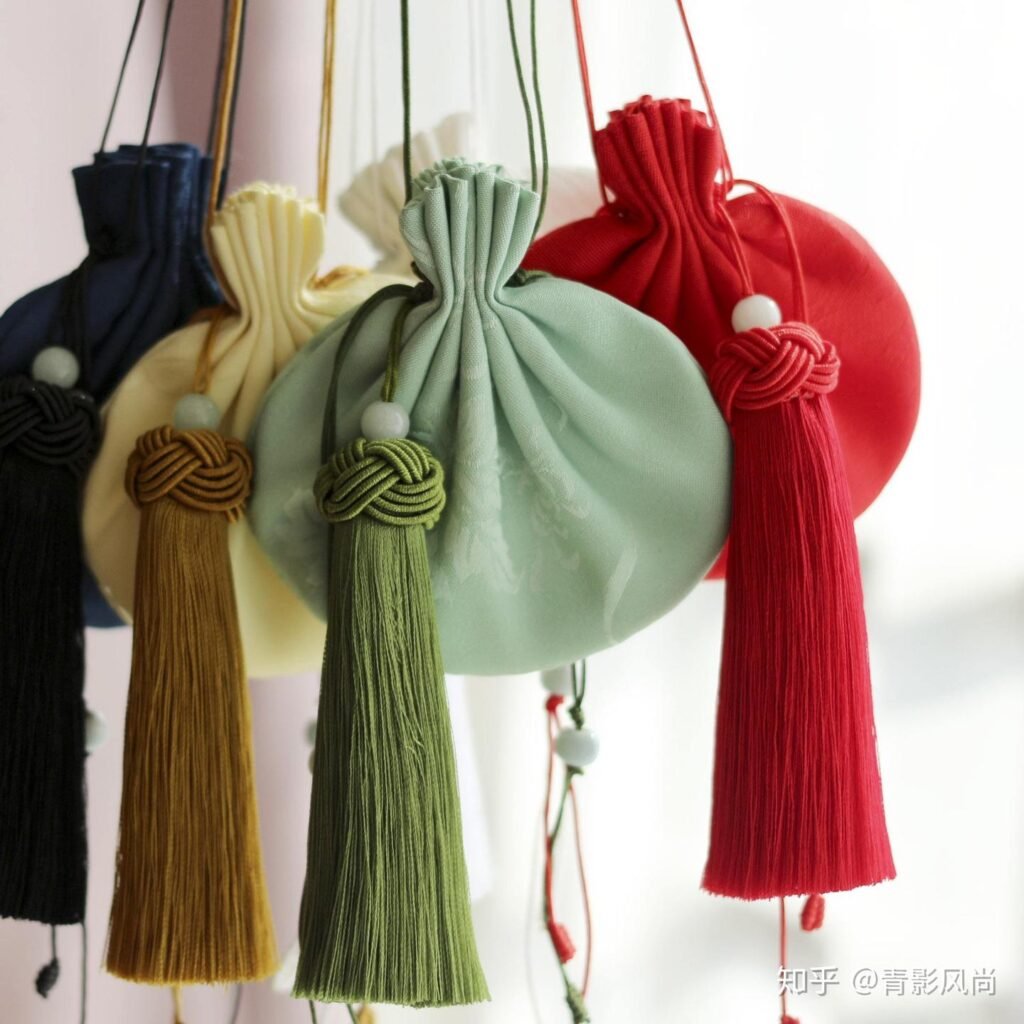
Duty or guilt, whatever it was — she knew full well the gulf between herself and an immortal, knew they could never truly walk the same road. Yet when she faintly sensed Beilu’s departure drawing near, she took up needle and thread by candlelight and embroidered a small pouch1.
She looked into his eyes and asked him, “Could you stay a few days longer…”
Those eyes were no longer as bright as at their first meeting, yet they utterly undid a man who had long been drowning in self-reproach.
Beilu accepted the pouch he had declined all those years ago, said he would stay a few days more — and could never again bear to leave Yinrong alone.
Yinrong’s lifespan would not be long. He wanted to walk with her to the very end of it.
“When the Master of Mount Han finds out, she’s going to be unhappy,” the little rabbit murmured from its master’s shoulder, tail swishing.
“It won’t be for long… Once this is behind us, I’ll return and plead my guilt before Master.”
From then on, the immortal of Mount Han shed his daoist robes and stowed away his magical implements. Taking a frail, sickly woman with him, he found a village of clear waters and green hills, bowed through the wedding rites2, and lived for a time an ordinary life.
Yinrong’s health was hardly good, but not too bad either.
She could water the flowers, cook the meals, mend the odd garment now and then.
In the cold of winter, the little rabbit came home each day dusted in snow.
It didn’t really mind the cold, but Yinrong worried all the same — insisting on holding it in her arms, measuring it this way and that with a cloth ruler, sewing it several fluffy little padded jackets.
Xixue was young, her cultivation shallow, human form still far away — and now, suddenly, she wore clothes like a human too. She bounded all over the village in delight, as if terrified someone might not notice.
The villagers knew the newly settled young couple were no ordinary folk, and that the little rabbit was a spirit beast — strange to look at, sweet in nature. Whenever they could spare it, old and young alike loved feeding it treats.
When it ate its fill and its heart was happy, it would blow bubbles at people; pop one open, and marvelous sights would swim up inside.
Those were the little rabbit’s memories.
Whoever was kind to it, it would share whatever memories it found beautiful.
Yinrong had seen more of its memories than anyone.
Once, she had been the most ordinary of women.
The farthest she had ever gone was the town to the south.
The bravest thing she had ever done was serve as bait on one of Beilu’s hunts for demon evil.
Now, chronically ill, she could go no great distance, do no great thing.
The little rabbit’s bubbles were the scenery she loved best — the scenery she longed for most.
The quiet days passed one by one.
Yinrong conceived, and her belly grew day by day.
Xixue found it fascinating, and loved lying atop it, ear pressed close, listening for movement within.
More than once Beilu, home after a long day’s work, caught her at it — snatching her up by the scruff until all four paws dangled in the air.
“Stop lying on her all the time.”
“I’m not even heavy!”
“You’ve clearly been putting on weight again.”
“I… have not…”
Guilty, the little rabbit drooped its ears and hugged its tail, looking to Yinrong.
Yinrong laughed. “I’ll testify — Xixue is very light. It’s so cold out; having her lie on me keeps me warm.”
Beilu said nothing more, only ruffled Xixue’s head.
In Xixue’s memory, those were very good, very peaceful days.
The village elders said children grow fastest of all — clothes fit for days before they’re outgrown. Yinrong sewed garment after garment, smallest to largest, stacked neat and tidy in the cabinet.
Seeing that other families’ children had toys, Beilu took up a small carving knife and whittled little cats and dogs and rabbits from wood.
At first his hands were clumsy, and his carvings came out grotesque — the little rabbit rolled over laughing with wicked glee all over its face, and when glared at, hid behind Yinrong, belly clutched, tail whipping.
Later his hands grew sure, and with a little spiritual power to help, the small house filled with wooden animals, lifelike to the last whisker.
That year, in the blazing heat of summer, Yinrong gave birth to a daughter.
Quiet — without a single cry.
The village midwife who came to help slapped the child’s bottom again and again, but not a sound came; a difficult look crept into her eyes.
The child neither cried nor fussed, and could not swallow milk. Beilu kept her hanging onto life with raw spiritual power for a few days — but in the end, quietly, she slipped away.
The villagers all said Yinrong’s body was simply too weak. Some things, perhaps, truly could not be forced.
Xixue lay by the window, watching Yinrong — pale as death — hold the child that had died, weeping until her eyes went hollow, until the tears themselves ran dry.
It was the first time it ever saw despair in her eyes.
Yinrong, who had never given up on herself through any suffering, crumbled in that moment as if the hurdle before her could never be crossed again.
She said it was her fault.
Beilu sat beside her in silence for a long while. Watching the light of the child’s soul fade, he moved as if urged by ghosts and gods — seizing and holding that departing wisp of soul.
He told Yinrong there was still a way to save their daughter.
The little rabbit crouched to one side, mouth opening, shocked — but it didn’t dare speak.
Only then did it realize: over a single talisman, that once-unshakable heart devoted to the Dao had fallen utterly into the abyss of self-blame, never to climb free again.
From then on, their home lost a dead child and gained a tiny puppet.
Beilu placed his daughter’s soul inside it, nurturing it with spiritual power — but he could never truly bring her to life.
Yinrong dressed the puppet in little clothes, and sewed a tiny rabbit, hanging it from the puppet’s hand. The light in her eyes flickered — lit, and went out.
Days later, holding the puppet, she watched in silence as Beilu and Xixue left the village.
Beilu had to return to Mount Han once.
What he could not do, Master surely could.
Before leaving, he left ample silver, begging the villagers to look after Yinrong.
On Mount Han, the waters of Jing Lake ran cold.
Stars and moonlight entwined with drifting motes of spiritual light, falling mirrored upon the lake.
At the sky’s edge, the Void Mansion3 had gone dim. The Master of Mount Han heard out his plea and let fall only a faint sigh. “Your dao-heart is in turmoil.”
“The world holds ten thousand sufferings, and I can’t save even one person…”
“Failing to save one person isn’t your fault.”
“…”
“Lay it down now, and you can still turn back.” With a sweep of her sleeve, the Master departed.
But the words “lay it down” — so weightless to speak, yet heavier than everything one heart had ever held.
There he knelt, and would not rise.
No food, no water, steadfast as bedrock.
The moon over Jing Lake waxed and waned, shattered and gathered again.
The mountain’s disciples passed to and fro; the astonishment, the sighs, the ache in their eyes all slowly turned to routine.
Day after day Xixue raced about the mountain, bringing food and spirit medicine beyond counting — he never once glanced at them.
Until the first winter snow settled over that stubborn frame, so long weathered by wind and rain.
Only then, beside his ear, came that faint sigh.
The Master’s heart could not, in the end, bear it. She granted him a single tree seed.
She told him: this was the Tree of Vitality. It could raise flesh and blood from wood, and fuse it with a soul.
In this world, every gain exacts a loss. The child born of this tree would be bound to it as well — the moment she left, her flesh would dissolve.
“This is a forbidden art — there’s no turning back.” Her voice grave, the Master closed her eyes and sighed without sound. “From this day on, I’ll act as though I never took you as a disciple.”
Behind her, the man knocked three resounding kowtows to the ground, then resolutely left Mount Han.
The blizzards that year were colder even than when he had saved Yinrong.
Beilu hurried home — but Yinrong was already gone. The villagers had buried her on the hillside.
In the long-abandoned, run-down wooden house, only a grubby little puppet remained, sitting obediently by the window, watching the snow swirl without end beyond the door.
…
The night fog dispersed; the sky grew light.
The memory ended there, dissolving without a sound — even the candle had burned down to nothing.
Qi Zhi sniffled, head bowed, wiping away a handful of tears.
“So Yinsha is that child.” Ah Yun lounged against the table, chin in one hand, eyes brimming with curiosity. “Then why’d she kill her own dad?”
Xixue lowered her head. “Maybe… because she hated him.”
Qi Zhi didn’t understand. “Why would she hate him?”
Ling Qiansu pondered a moment, gazing at the little wooden puppet, and sighed softly. “If someone had been trapped in a single place from the moment consciousness first began… perhaps she truly would come to hate?”
Ah Yun: “How many years was she trapped, to go this insane?”
Xixue: “Eighty-some years…”
“That’s it?” Ah Yun’s face scrunched with disdain. “Ugh! I don’t get it!”
Ling Qiansu: “…”
Qi Zhi’s mouth hung open; she blinked — the things she didn’t dare say, Ah Yun always said for her.
She’d endured five hundred years of contempt at Tiandao Sect, five hundred years of menial labor, had very nearly been sacrificed alive — and she’d never once said anything about killing everyone.
Well —
It was true that everyone had died all the same. But she never said it, and that was that.
Thinking this, Qi Zhi glanced involuntarily at Mu Qingshi.
As luck would have it, their eyes met full on. Qi Zhi froze for an instant, then quietly lowered her gaze.
Ears drooping, the little rabbit reached out with her paws, gathered up the puppet, and went on with the story.
“Who asked her to have no heart…”
Xixue said the Tree of Vitality had raised Yinsha’s flesh and blood, but it could never raise a heart.
A puppet without a heart — how could it ever know good from bad?
That year, Beilu planted the Tree of Vitality on this desolate mountain.
Through immortal landscape creation he raised this villa from nothing — and brought the child to life.
In Xixue’s memory, Beilu always felt that defying heaven this way would one day summon retribution. Countless times he asked whether she wished him to sever their spiritual contract, hoping she wouldn’t be bound to this place.
Every time, she only shook her head — nothing could make her agree to sever it.
When she wouldn’t be persuaded, Beilu would just rub her head and ask softly, “Then from now on, stay with me. We’ll protect Yinsha together, always. All right?”
Xixue nodded hard.
The puppet had no heart — no desires, no notion of what joy was.
It just sat, wooden and blank, staring into space in one spot.
The little rabbit spun in anxious circles, exhausting every trick it had ever used to soothe human children — all to no effect.
It blew bubbles until it was worn out; the little block of wood wouldn’t even glance at them.
Later, drawing on the Tree of Vitality, Beilu created the Dream Furnace.
The Dream Furnace could brew memories into fine wine, and turn that wine into a dream.
What is heard is less than what is seen; and what is seen is less than what is felt firsthand.
He thought that if dreams could let Yinsha know emotion after emotion, perhaps the puppet might, little by little, grow a heart.
Hearing this, Xixue swished her tail, lay down at the furnace’s mouth, and blew in bubble after bubble.
The first mouthful of wine down, Yinsha had a beautiful dream.
When she woke the next day, a faint glimmer at last lit those wooden eyes.
For a long stretch after, Xixue ranged far beyond the villa.
Carrying the spirit herbs and medicines grown inside, she traded with strangers for beautiful memories, then carried them home to brew wine and dreams for Yinsha.
Yinsha slowly came alive, began looking forward to each new dream.
In and out of the villa Xixue went, bringing her more and more tales of the world beyond, feeding them through the Dream Furnace into her dreams.
Yinsha grew happier by the day, more and more like an ordinary girl — lively, quick to laugh.
Xixue was happy for her, and happy for Beilu.
But neither she nor Beilu knew that beneath Yinsha’s docile surface lay a craving born who knew when.
She began to notice she was not like others.
In truth, she could not feel the emotions inside those dreams at all.
She only seemed to understand so much because she had discovered that if she could imitate those emotions, Beilu and Xixue would be so pleased.
So she imitated, and studied, and tried endlessly to please the only two beings she had.
But the more she came to know, the stranger it all seemed to her.
She could not help wondering why she was different from Beilu, from Xixue — even from the people in her dreams.
Xixue could go so far away all alone. Why was it that the moment she tried to leave this place, agony tore through her?
Was it because her cultivation was still too shallow?
Every unanswered question was a greater cage than the Tree of Vitality itself — growing day after day, endless as creeping vines, until at last it caged her utterly.
Yinsha thought about it for a very long time, and decided she could not understand because she lacked that one heart.
In dreams and out, everyone had a heart.
Only she had none.
But she so badly wanted to feel the emotions that had never been hers.
Beilu had said it himself: she was his daughter; whatever she came to love, he would find and give her.
In that case, why couldn’t he give her his heart — and his cultivation along with it?
He wouldn’t even have to go searching for those.
So Yinsha reasoned — and the more she reasoned, the more the unfairness of it burned.
She guessed that perhaps she had grown an emotion that might, seemingly, be called “hate.”
Hating that others could, and she could not.
How strange — without even a heart, she had learned, in one beautiful dream after another, what “hate” was.
On a snowy night two hundred years ago, that little puppet who knew neither sorrow nor joy — moved by something that perhaps ought to be called curiosity, without the faintest warning — turned her hand into wooden thorns.
They sank into flesh that guarded nothing, and closed fast around a beating heart.
And with something near madness, she seized everything she had never possessed.
That night, Xixue, still lost in sleep, felt her divine soul shudder violently. When her eyes opened again, the spiritual contract that had tethered her life was already collapsing into nothing within her soul.
It was the only thing her master, in the moment of dying, could still do with the last of his strength.
She lifted her head and saw Yinsha set that heart into her own flesh.
From eyes brimming with curiosity, a single tear fell, slow.
When the heart began to beat within that flesh, Yinsha looked at Beilu — at the one she had taken everything from — and for the first time, felt a human emotion with perfect clarity.
It was emptiness. It was loneliness…
And there was one thread of something that, no matter how much time passed, she would never want to admit.
— Regret.
Yinsha frowned. Her blood-drenched hands came up gently to cover her chest.
There’s a hole in here, she thought. Probably.
After a long silence, she began to murmur —
“It hurts so much. If it weren’t yours…”
“I would have thrown it away.”
The author has something to say:
And so it was that the once-lively, bouncy bunny-bun received a great big fright, and from that day forth became a withdrawn little wage-slave bunny.
Until one big wicked bird came along and gave her several hard kicks. 【Big fog.】4
Footnotes
- 荷包 | hebao | A small embroidered drawstring pouch worn at the waist or belt; in traditional courtship, a hand-sewn hebao was a classic token of a girl's heart, and its acceptance a quiet answer of affection.
- 拜堂 | bai tang | Literally 'performing the bows' — the heart of a traditional Chinese wedding: bride and groom bow to heaven and earth, to their parents, and to each other; completing the bows completes the marriage.
- 虚宿 | Xu Xiu | The 'Void' star mansion, one of the twenty-eight lunar mansions of classical Chinese astronomy — celestial stations tracing the moon's nightly path across the sky; its dimming was read as an ill omen.
- 大雾 | da wu | Literally 'big fog' — a homophone pun on 'big mistake,' internet slang appended after absurd claims as a jocular disclaimer meaning 'just kidding, don't take this seriously.'
0 Comments