Little Alpaca – Chapter 167
by Little PandaVolume 4: Immeasurable
From that day on, the Wood God traveled frequently between Snake Mountain and the Jade Sea. Anyone could see that she expended a great deal of divine power each time she returned.
The little bird, now grown, gave her gifts that were slightly more precious than before: mortal trinkets, beautiful jades, paintings and calligraphy from unknown origins, and even little storybooks from the mortal realm.
The Wood God always stayed by the Fusang tree. Besides Fusang, the only one she could talk to on a daily basis was that smug and arrogant Golden Crow.
To call the Golden Crow arrogant2 wasn’t prejudice; back then, he truly was so narcissistic and conceited that no one knew how to get along with him.
It got to the point that even Luo Mingyuan, watching the past Golden Crow in this Realm Within a Painting,3 couldn’t help but furrow his brow, as if he refused to admit that fucking idiot4 was once him.
But that’s an aside.
In any case, the the Yi Bird brought storybooks5 from the mortal realm to the Jade Sea, hoping the Wood God could use them as a small diversion in her leisure time.
Unfortunately, most mortal storybooks were tales of a man’s joy and a woman’s love,6 which didn’t much interest the Wood God. They all ended up becoming Fusang’s reading material instead.
One day, the Wood God was half-reclined on a treetop, resting and recuperating her spirit.
The little bird flew in from the distance and paced back and forth beneath the Fusang tree. When she saw the storybook she had given the Wood God in Fusang’s hands, she grew a little displeased. She flew down to Fusang’s side, took on her human form, and asked in a low voice, “Goddess Fusang, why are you reading this storybook from the mortal realm?”
“I borrowed it from Goumang,” Fusang said, raising an eyebrow at Yusu.7 She couldn’t help but smile. “Didn’t you give it to her?”
“…Yes, I did.”
“The stories in here are all about the love between men and women. What’s the point of giving it to that piece of wood, Goumang? You might as well have given it to me. I can appreciate it more.”
Hearing this, Yi Qiu couldn’t help but laugh out loud.
The most amazing thing in the world had to be a real piece of wood complaining that a bird was a piece of wood.
And Fusang was truly bold to say such a thing. The Wood God was still sleeping right above them. What would happen if she heard that?
Yusu grew flustered. “I—I haven’t read them either! I just heard people say they were interesting, so I brought them back… If—if you can appreciate them, then go ahead. The Wood God doesn’t like them, so I just won’t bring any more in the future.”
Fusang laughed. “Don’t say that. It’s not like I can leave the Jade Sea, either. Since you have time to go to the mortal realm, you should bring me back something from time to time. I see Goumang getting little gifts every day, and I’m about to die of jealousy. As a bird, you shouldn’t play favorites like this. It’s making me think that you, toward Goumang…”
Fusang’s voice dropped, and she leaned in close to Yusu’s ear, teasing, “It’s making me think that you’ve developed those mortal feelings for Goumang.”
Yusu immediately lowered her gaze, her expression tense. “…Next time. Next time I see something suitable, I’ll bring it back.”
The Wood God looked down at the two of them beneath the tree. Though she didn’t know what they were whispering about, she still smiled faintly and shook her head.
It wasn’t hard to see that the look in the Wood God’s eyes when she gazed at Yusu held an affection different from how she looked at others.
Only, she herself was not yet aware of it.
Yusu asked, “The Wood God doesn’t like storybooks from the mortal realm?”
The Wood God answered, “I’ve had little contact with them.”
After that, Yusu was always by the Wood God’s side, telling her all the stories she had seen and heard in the mortal realm, one by one.
Yusu asked, “Does the Wood God eat pastries from the mortal realm?”
The Wood God answered, “I have never eaten them.”
After that, Yusu often brought back all sorts of sweet cakes from the mortal realm, pestering the Wood God, who never ate the five grains,8 to try them.
The little Bird Demon always wanted to give everything she loved to the deity who had saved her.
And that deity never once refused the Bird Demon’s offerings.
Over time, the once-demure bird grew more and more lively, and her requests grew more frequent by the day.
But whatever she wanted, the Wood God would do her best to provide.
Sometimes she would accompany her to find morning dew; sometimes she would taste the five grains with her; sometimes she would hide her in her sleeve and take her to lively banquets in the Heavenly Court;9 and sometimes, in the dead of night, she would listen to the bird softly sing ballads from the mortal realm.
The years always slipped by unnoticed.
The Wood God spent over two hundred years finally restoring Snake Mountain to its former state.
The grass and trees were lush, brimming with life, and she even took in many weak and homeless demon spirits10 to live there.
But for some reason, she found she was reluctant to send Yusu back.
One night, Fusang couldn’t help but ask, “Now that the little bird’s Snake Mountain has been restored, why haven’t you sent her back?”
The Wood God was silent for a long time before finally saying softly, “In a few days… just a few more days, and I’ll send her back.”
“You can’t bear to let her go, can you?”
“…” The Wood God raised the corners of her lips into a strained smile.
“I can see that the little bird can’t bear to leave you either, but you must understand what kind of feeling this is. After all…” Fusang’s voice was grave. She looked at the Wood God and hesitated for a long time, but in the end, she didn’t finish her sentence.
“She should go back,” the Wood God said faintly.
In truth, it had nothing to do with being able to let go or not. the Yi Bird did not belong in the Jade Sea.
She was, after all, a demon.11 Unless she formed a blood contract12 with a god and became a servant, she could not remain long in the Heavenly Realm. No one was interfering now, but as time went on, the Heavenly Realm would eventually intervene.
The Jade Sea had always been desolate, completely devoid of demon spirits.
Snake Mountain was so much better. It was far livelier than the Jade Sea. Yusu would surely be happy to go back.
The Wood God thought this, but she still couldn’t stop herself from delaying the day she would send Yusu away, again and again.
She never even told Yusu that Snake Mountain had long been restored.
There is a voice in my heart, pulling at my reason with all its might, desperate to scream, to declare—I just want to keep that little bird. You are not allowed to send her away.
This internal struggle grew, gradually distorting all the scenes within the Realm Within a Painting.
Suddenly, the Jade Sea churned with massive waves amidst a torrential downpour, like a punishment sent down from the heavens, and for a long time, it did not cease.
In that moment, everyone who had entered the realm could feel the unspoken, lingering attachment13 in the Wood God’s heart.
But in the next second, everything returned to tranquility.
After an unknown amount of time, You Yan softly spoke the words that Fusang hadn’t dared to say: “Gods and immortals cannot fall in love with demons.”
That light, airy sentence seemed to drift away to the horizon on the wind.
The Yi Bird flew in from the distance, landing on the shore where the Wood God was raising her head in expectation.14
She took on her human form, clasped her hands behind her back, and walked step by step across the fine sand toward the Wood God before her.
Her eyes were filled with the image of that deity.
Not just today, but every day and night of the past three hundred years—the Yi Bird Yusu had long since carved the Wood God Goumang into her heart and soul.
A trace of curiosity flashed in the Wood God’s eyes. She smiled faintly at Yusu and asked softly, “What are you hiding behind your back today?”
This little bird always loved hiding and tucking away the gifts she brought back from the mortal realm, acting all mysterious and secretive, as if she hadn’t brought them back from a thousand li distant15 just to give them to her.
“Guess!”
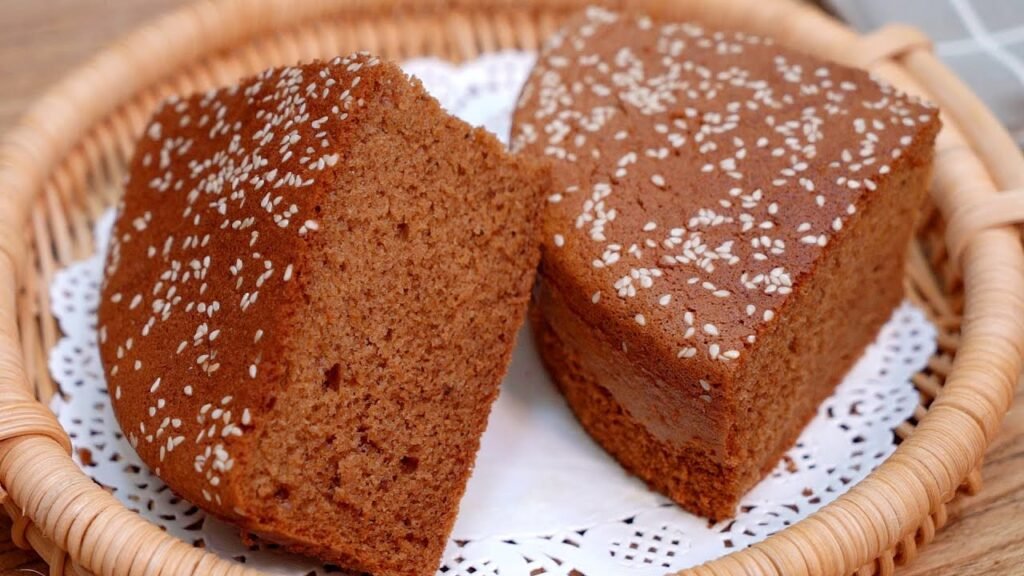
“The Jujube Paste Cake16 you mentioned last time?”
“Wrong!” Yusu shook her head.
“Mortal rouge and powder,17 or trinkets?”
“Wrong again!” Yusu shook her head once more.
The Wood God couldn’t guess. She gave a helpless smile. “Don’t make it so hard for me.”
Yusu lowered her gaze, unconsciously pursing her lips. A faint blush crept onto her cheeks, and it took a long while before she finally brought out the hidden item from behind her back.
It was a silk handkerchief.18
Embroidered on it was a five-colored bird, perched upon a green vine.
“I… I secretly embroidered this for a long time. I don’t know how many times I had to start over to finally make one like this,” Yusu said, timidly looking up at the Wood God.
She should understand, she thought.
After all, she had once told her that mortal women were reserved and, when expressing their love, would always gift an embroidered item they made themselves to the person of her heart’s desire.
Yusu had mustered all her courage for this day. She had thought she would get the response she wanted, but she was met with only a long, drawn-out silence.
That day, Yusu presented the only gift in three hundred years that the Wood God did not accept.
Yusu stood on the shore as the sea breeze chilled her cheeks. All the joy in her expression slowly dissipated, inch by inch, in that silence.
For a moment, Yi Qiu couldn’t help but press her lips together, her grip on You Yan’s hand tightening.
She feared this kind of silence, just as she feared seeing two people in love who did not dare to be together.
But in the end, it still happened.
After the long silence, the Wood God took two dazed steps forward and asked softly, “I have restored Snake Mountain. You said you wanted a home. Now… you can go back.”
“Go back?”
“Go back to the place where you belong.”
Yusu quietly lowered her eyes, seeming to be stunned for a long time. The silk handkerchief in her fingers was carried away by the wind, falling into the Jade Sea behind her. No one turned back to pick it up, and it slowly drifted toward an unknown distance.
When she looked up again, her eyes were already filled with tears.
“There’s no room for me here anymore, is that it?”
“You can always come to visit…”
Yusu cut the Wood God off. “You’re driving me away, aren’t you?”
After a brief silence, the Wood God said in a low voice, “This is the Heavenly Realm. You were never meant to stay here for long.”
“You’re driving me away just because of that?”
“…”
“Lady Wood God, do you really want to avoid… my feelings for you this badly?” Yusu’s eyes reddened as she stepped forward to press the question. “Are they so unbearable?”
“It’s not…” The Wood God unconsciously took half a step back, a hint of panic appearing in her eyes.
She looked at Yusu and said softly, “It shouldn’t be me. Where the heart yearns… it can be anyone, but it shouldn’t be me…”
After what felt like an eternity, Yusu finally said softly, “But as it happens, besides you, there is no one else.”
She said that when she had been in agony and despair in a sea of fire, having lost everything, whoever saved her would become the only light she could grasp in the endless darkness.
Her life was given to her by the Wood God, but if it were only her life, that would have been one thing.
But it wasn’t just a life. It was a heart, a heart that had nearly stopped beating in that inferno.
She had approached that ray of light so cautiously, terrified that one wrong move would earn her disgust.
But that deity was so gentle.
The deity accepted all of her, which made her believe, again and again, that the distance between them was not as vast as she had imagined.
“When all the grass and trees had withered, you were the one who gave me a reason to live. I was willing to see you as my only desire in heaven and earth… How can you treat me as just one of all living things19 that you were meant to save?”
“…”
“In your heart, was I ever special, even just a little?”
“…”
That day, the Wood God gave no reply.
The Yi Bird flew away from the Jade Sea. The Wood God stood transfixed on the shore for a long time, then suddenly, as if she had lost her soul, she began searching for something on the boundless surface of the sea.
Yusu did not get the answer she wanted, but Yi Qiu was now certain that the heart of the Wood God Goumang was not made of grass, trees, and stubborn rocks.20
“She clearly can’t let go, so why did she have to?”
“If she had been able to press on resolutely21 back then, as she does today, the Yi Bird might not have become what she is now…” Jian Li lamented softly. “If she truly had feelings, couldn’t she have given up her immortal register22 for her?”
“If some minor immortals and minor gods23 of low status were to fall in love with a demon, it wouldn’t be impossible for them to give up their immortal register to be together,” Xun Chi said quietly. “But someone of the Wood God’s status is tied to the spring birth of all things24 in the Two Realms of Heaven and Mortals. If she were to disregard everything for a little demon25 who couldn’t even protect herself…”
“What would happen?” Yue Zhuo asked curiously.
“I’m afraid that for the sake of peace in the two realms, the Heavenly Realm would have forcibly executed that little demon on the Demon-Slaying Platform,26 until her soul flies and spirit scatters,27 to never be reincarnated for all eternity…”28
It turned out that sometimes, letting go… was its own form of being unable to let go.
Footnotes
- Hanzi: 舍得。 | Pinyin: shědé. | Context: Literally: ‘to be willing to part with’. This is a common verb that encapsulates the complex feeling of being able to let something go, often implying a sacrifice or a difficult choice.
- Hanzi: 臭屁 | Pinyin: chòu pì | Context: Literally: ‘stinky fart’. A common and informal slang term for someone who is arrogant, cocky, or a show-off.
- Hanzi: 画中境 | Pinyin: huà zhōng jìng | Context: A magical space or dimension that exists within a painting, often used to revisit memories or create illusions.
- Hanzi: 傻逼 | Pinyin: shǎbī | Context: Literally: ‘stupid cunt/idiot’. A very strong and vulgar insult, roughly equivalent to ‘fucking idiot’ or ‘dumbass’.
- Hanzi: 话本 | Pinyin: huàběn | Context: A genre of vernacular Chinese fiction that flourished during the Song, Yuan, and Ming dynasties. They were often promptbooks for professional storytellers and frequently dealt with popular themes like romance and adventure.
- Hanzi: 男欢女爱 | Pinyin: nán huān nǚ ài | Context: Literally: ‘man’s joy, woman’s love’. A four-character idiom referring to romantic love, passion, and intimacy between a man and a woman.
- Hanzi: 郁溯 | Pinyin: Yù Sù | Context: The name Goumang gave to the the Yi Bird.
- Hanzi: 五谷 | Pinyin: wǔgǔ | Context: A classical term referring to the five staple crops of ancient China (the exact list varies but often includes rice, wheat, millet, etc.). It is used as a general term for staple foods, which deities are often depicted as not needing to consume.
- Hanzi: 天庭 | Pinyin: Tiāntíng | Context: The central court or palace of the Heavenly Realm, where the Heavenly Emperor presides and formal events like banquets are held.
- Hanzi: 妖灵 | Pinyin: yāolíng | Context: A general term for lesser demons or spirits, often those without a stable physical form or significant power.
- Hanzi: 妖精 | Pinyin: yāojing | Context: A supernatural being, often an animal or object, that has gained spiritual power and intelligence over a long period of time. It can be translated as demon, spirit, or goblin depending on the context.
- Hanzi: 血契 | Pinyin: xuè qì | Context: A magical pact sealed with blood. In this context, it creates a binding, often subservient, relationship between a demon and a god.
- Hanzi: 执念 | Pinyin: zhíniàn | Context: A Buddhist concept referring to a persistent, obsessive thought or desire that one cannot let go of. In cultivation stories, it can be a source of power but also a path to corruption or the formation of a Heart Devil.
- Hanzi: 翘首以盼 | Pinyin: qiáoshǒu yǐ pàn | Context: An idiom describing the act of eagerly looking forward to something or someone’s arrival.
- Hanzi: 千里迢迢 | Pinyin: qiānlǐ tiáotiáo | Context: An idiom emphasizing a very long and arduous journey. A ‘li’ is a traditional Chinese unit of distance, roughly 500 meters.
- Hanzi: 枣泥糕 | Pinyin: zǎoní gāo | Context: A traditional Chinese pastry made from glutinous rice flour and a sweet filling of red date (jujube) paste.
- Hanzi: 脂粉 | Pinyin: zhīfěn | Context: A classical, poetic term for cosmetics, and by extension, for feminine beauty or concerns.
- Hanzi: 绢帕 | Pinyin: juànpà | Context: A small handkerchief made of fine silk. In historical contexts, an embroidered handkerchief was a common token of love given by a woman to her beloved.
- Hanzi: 芸芸众生 | Pinyin: yúnyún zhòngshēng | Context: Literally: ‘numerous living beings’. A term with Buddhist origins that refers to the multitude of ordinary, sentient beings in the world.
- Hanzi: 草木顽石 | Pinyin: cǎomù wánshí | Context: A metaphor for something or someone that is unfeeling, unemotional, and unresponsive, like inanimate nature.
- Hanzi: 义无反顾 | Pinyin: yìwúfǎngù | Context: Literally: ‘righteousness without turning back’. An idiom meaning to pursue a just cause with determination and no hesitation, regardless of the consequences.
- Hanzi: 仙籍 | Pinyin: xiānjí | Context: One’s official status or registration as an immortal in the celestial bureaucracy. It can be revoked as a punishment, stripping a deity of their rank and power.
- Hanzi: 小仙小神 | Pinyin: xiǎo xiān xiǎo shén | Context: Literally: ‘little immortals and little gods’. A colloquial term for deities of low rank and status within the heavenly hierarchy.
- Hanzi: 万物春生 | Pinyin: wànwù chūn shēng | Context: This phrase describes the concept of spring as the season that brings life and growth to the natural world. It is the fundamental responsibility of the Wood God.
- Hanzi: 小妖 | Pinyin: xiǎo yāo | Context: A term for a demon of low power, status, or age.
- Hanzi: 斩妖台 | Pinyin: zhǎn yāo tái | Context: A platform in the Heavenly Realm specifically designated for the public execution of demons.
- Hanzi: 魂飞魄散 | Pinyin: húnfēi pòsàn | Context: An idiom describing a state of extreme terror, or more literally in a fantasy context, the complete and utter destruction of one’s soul, leaving no possibility of reincarnation.
- Hanzi: 永世不得轮回 | Pinyin: yǒngshì bùdé lúnhuí | Context: The ultimate punishment in this cosmology, where a soul is so thoroughly destroyed that it is removed from the cycle of rebirth forever.
0 Comments